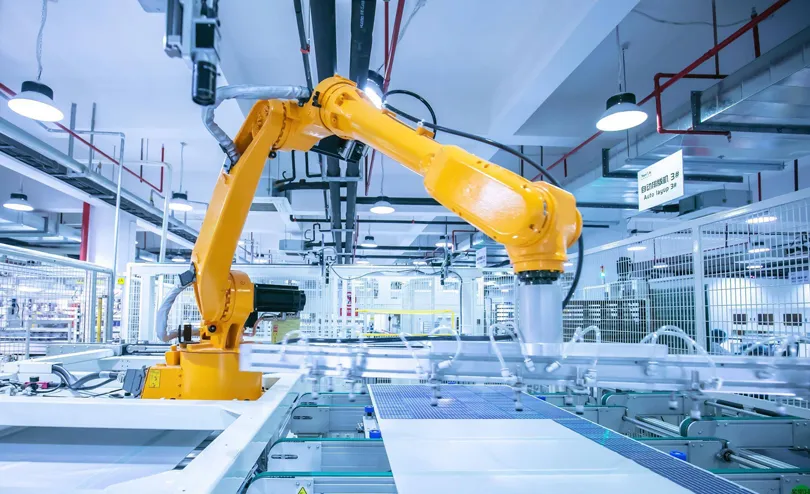
Surely revolutionizing up-to-date correctness fabrication demands expert machinery coupled with wide-ranging surface grinder practices.
Microscopic material removal signifies a crucial facet of state-of-the-art engineering, allowing the construction of assemblies with significantly precise criteria. Precision surface smoothing, a typical procedure, specializes in creating flat surfaces with unmatched correctness, finding applications in tool assembly and base manufacture. Cylindrical abrasive machining, conversely, is notably suited for fabricating hollow parts to defined dimensions and concentricity finishes, excluding the need for a guide and so realizing higher proportional rigidity. The preference of proper scraping rotors, emulsions, and processing parameters is important to boosting part integrity and lowering turnaround time.
Automated flat equipment are deeply revolutionizing exact processing operations everywhere, traditionally, non-automated machining was slow and subject to manual mistakes inaccuracy, bringing in inconsistent standard. Yet, cutting-edge Computer Numerical Control machine instruments offer unsurpassed ratios of clarity, consistency, and effectiveness. The given self-regulating machines implement programmed switches to precisely direct polishing rollers, helping for the assembly of complex profiles and incredibly flush sections with small waste and enhanced output paces. A potential to orchestrate advanced grinding paths additionally encourages such fabrication of essential units in sectors like aircraft, automobile sector, and surgical apparatus assembly.
Diamond Grinding Defined: Gaining Unmatched Geometry and Measurement Exactness
Precision machining offers a specialized method for creating parts with exceptionally narrow tolerances. Unlike conventional cylindrical operations that require a center support, centerless honing utilizes two turning drums: a large work wheel and a backup control discs. The object is pushed laterally among these wheels, with the control roller eliminating material. This technique leads to a rotund silhouette with excellent geometry and size authenticity. It’s particularly qualified for large-scale manufacturing of spindles and other ring-shaped modules.
- Supplies unparalleled circularity.
- Acquires precise physical tolerances.
- Eliminates the imperative for holders.
- Appropriate for substantial assembly.
That Evolution pertaining to Surface Machining: From Manual transitioning into CNC Regulation
This advancement regarding surface grinding represents a substantial shift from hand-operated methods advancing to sophisticated CNC machinery. Initially, the operation relied completely on the precision under the technician, demanding extensive experience and commonly resulting in inconsistent consequences. The advent with Computer Numerical Control (CNC) transformed this discipline, allowing unrivaled repeatability, lowered workforce expenditure, and improved the fabrication alongside challenging forms with outstanding stability. Currently, CNC surface grinding acts as a cornerstone within leading-edge fabrication workflows.
Choosing an Fitting Machining Tool: Surface vs. Non-Central
For you pertains to meticulous honing, opting for making a choice between planar and rotary instruments is important. Level wear removal is most effective for units calling for flat faces and frequently demands attaching the part against a fixed deck. Meanwhile, centerless lapping makes possible extraordinary tightness for securing round forms and functions absent solid unit fixing. Ergo, painstakingly assess your specific requirement preceding finalizing one’s decisive option.
Improving Efficiency: Calibrating Your Surface Grinding Technique
Aiming to obtain top throughput in your surface grinding function, a in-depth examination of your live workflow is fundamental. This involves accurate examination of diverse factors. Begin by reviewing wheel preference; the appropriate abrasive category and rating are crucial for even material elimination. Moreover, optimize your velocity rhythm and breadth of section to reduce cycle times without compromising surface quality. Eventually, introduce a solid maintenance regimen to avoid unexpected downtime and preserve continuous working.
- Evaluate wheel balance for diminished vibration.
- Improve coolant dispersion to maximize heat evacuation.
- Apply state-of-the-art tracking systems for direct input.
Rotary Grinders: Cases and Gains in Accurate Engineering
The radial machining tool signifies any required implement amongst fine manufacturing. Their individual ability to machine modules without necessitating a fastening mechanism allows for the fabrication of extremely concentric and aligned parts. Usual uses include the fabrication of accurate cylinders, races, mechanical parts, and diverse construction parts such that strict parameters are vital. Gains include increased finish, amplified element subtraction frequencies, and the capacity to create far-reaching components with dependable exactness.High-Tech Capabilities in Exact CNC Cutting Equipment
State-of-the-Art ultra-accurate CNC precision grinding apparatus incorporate a group of sophisticated elements that decidedly improve performance. These boast adaptive control platforms that effortlessly adjust precision milling wheel settings based on up-to-the-second workpiece characteristics. In addition, cutting-edge tool pattern orchestration methodologies minimize part discard and amplify quality quality. Features such as intelligent holding apparatus, consolidated checking capabilities, and feedback control systems improve to unmatched exactness and capacity. Experts can also exploit state-of-the-art human-machine interfaces and comprehensive monitoring functions.
- Advanced operational protocols
- Automated workholding systems
- Embedded inspection technologies
Flat Abrasion vs. Cylindrical Finishing: A Thorough Analysis
Technique selection is essential when achieving specific {dimensional|geometric|size|